

Retrospective · desktop log analyzer
Read logs where they are written.
Open log files, Windows Event Logs and container logs from many machines in one table, sorted by time — over the SSH and Windows access you already have. Nothing to install on the servers.
Retrospective is a desktop app for Windows, macOS and Linux. Send yourself the link and install it on your computer.
Runs on Windows, macOS and Linux.
Version 8.0.0 · released 19 November 2026 · free to try, with no trial period that runs out
An example
"Errors when saving. For about a week."
That is all support could tell you. The application runs on four servers behind a load balancer. Nobody knows which server, nor since when. The central logging keeps three days, warnings and errors only.
-
Bring in the servers you already use
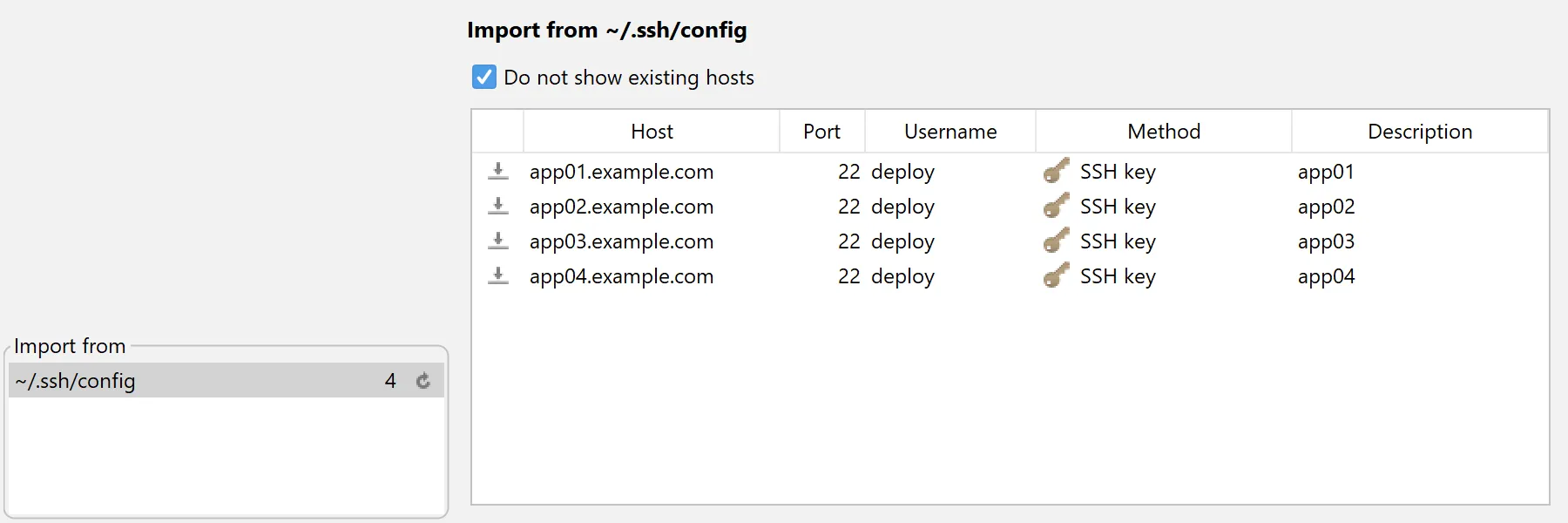
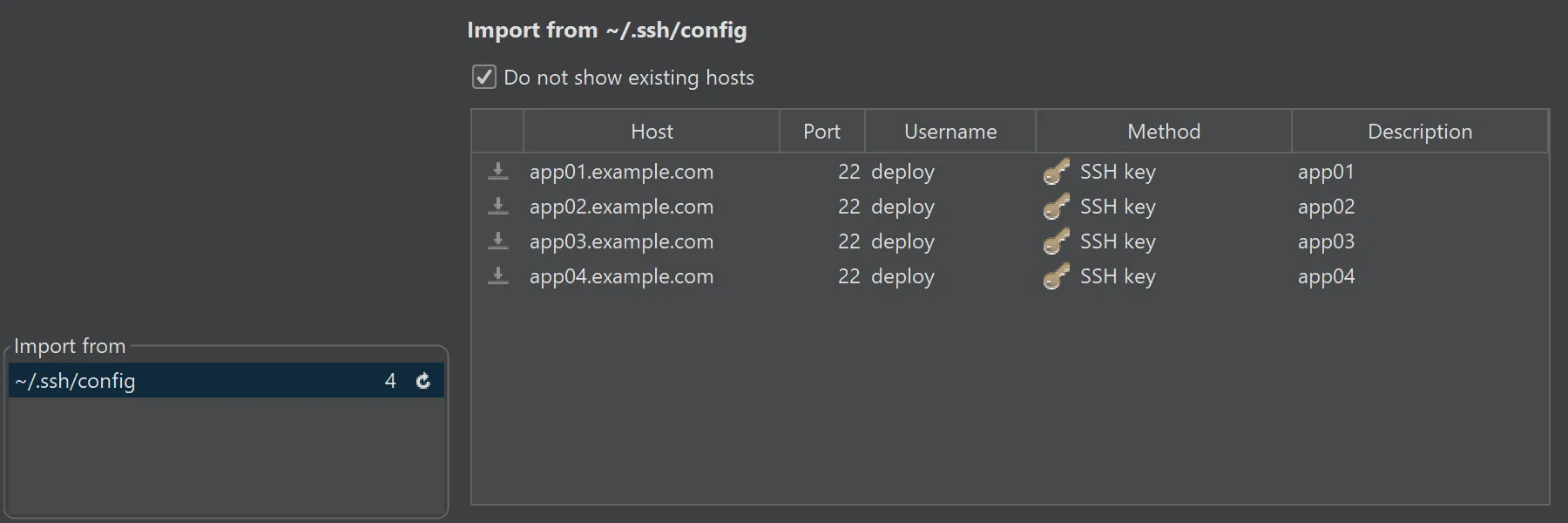
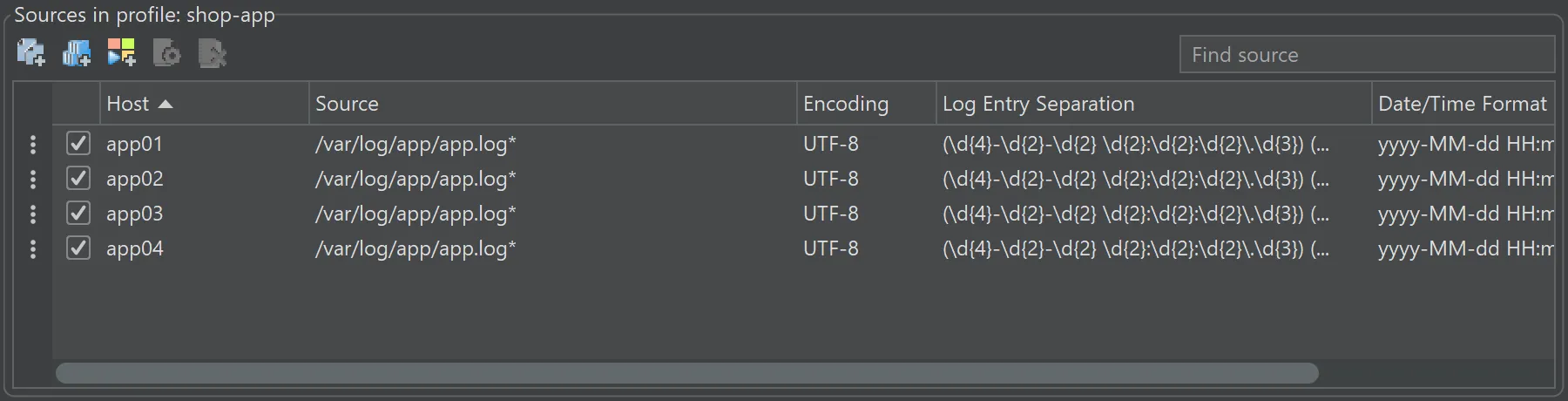
Import the four hosts from
~/.ssh/configor from PuTTY. Same users, same keys as in your terminal.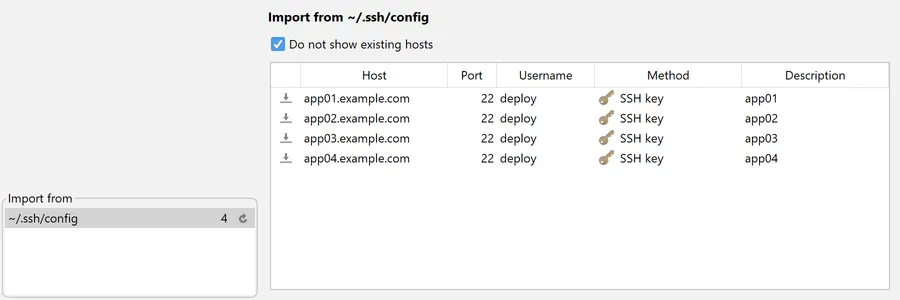
-
One data source for all four, including old files
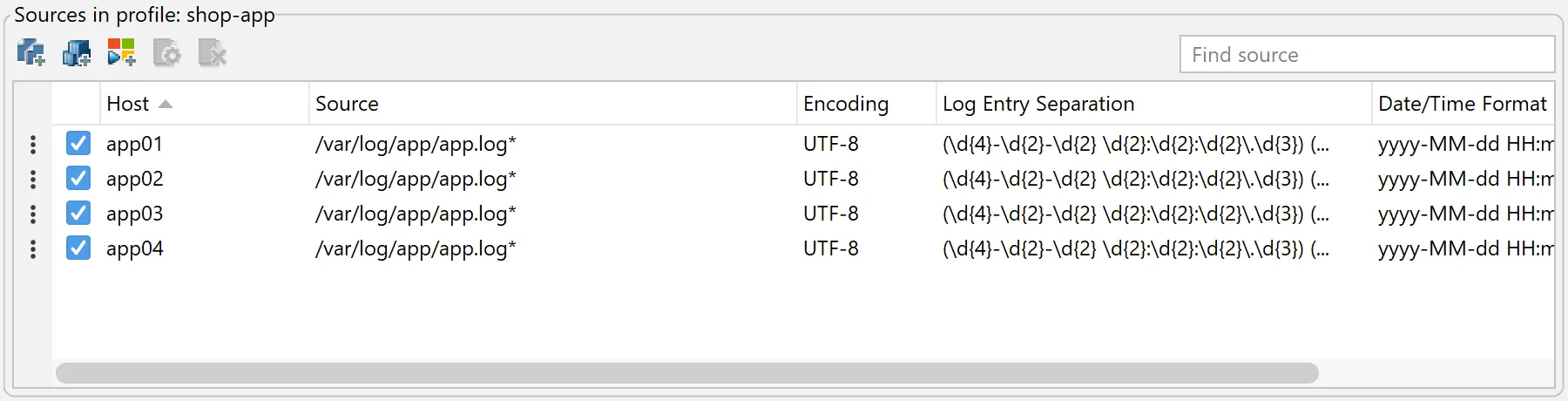
Point it at
/var/log/app/app.log*. That covers today's log and the rotated and compressed ones from last week.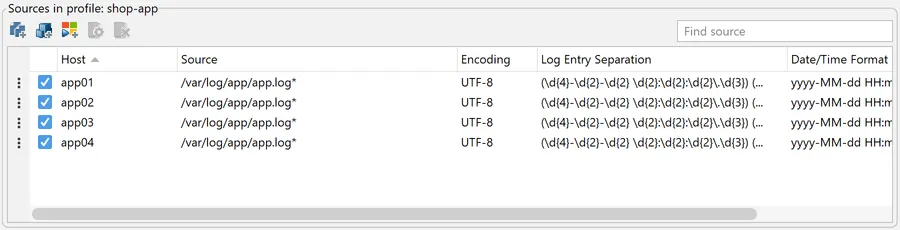

-
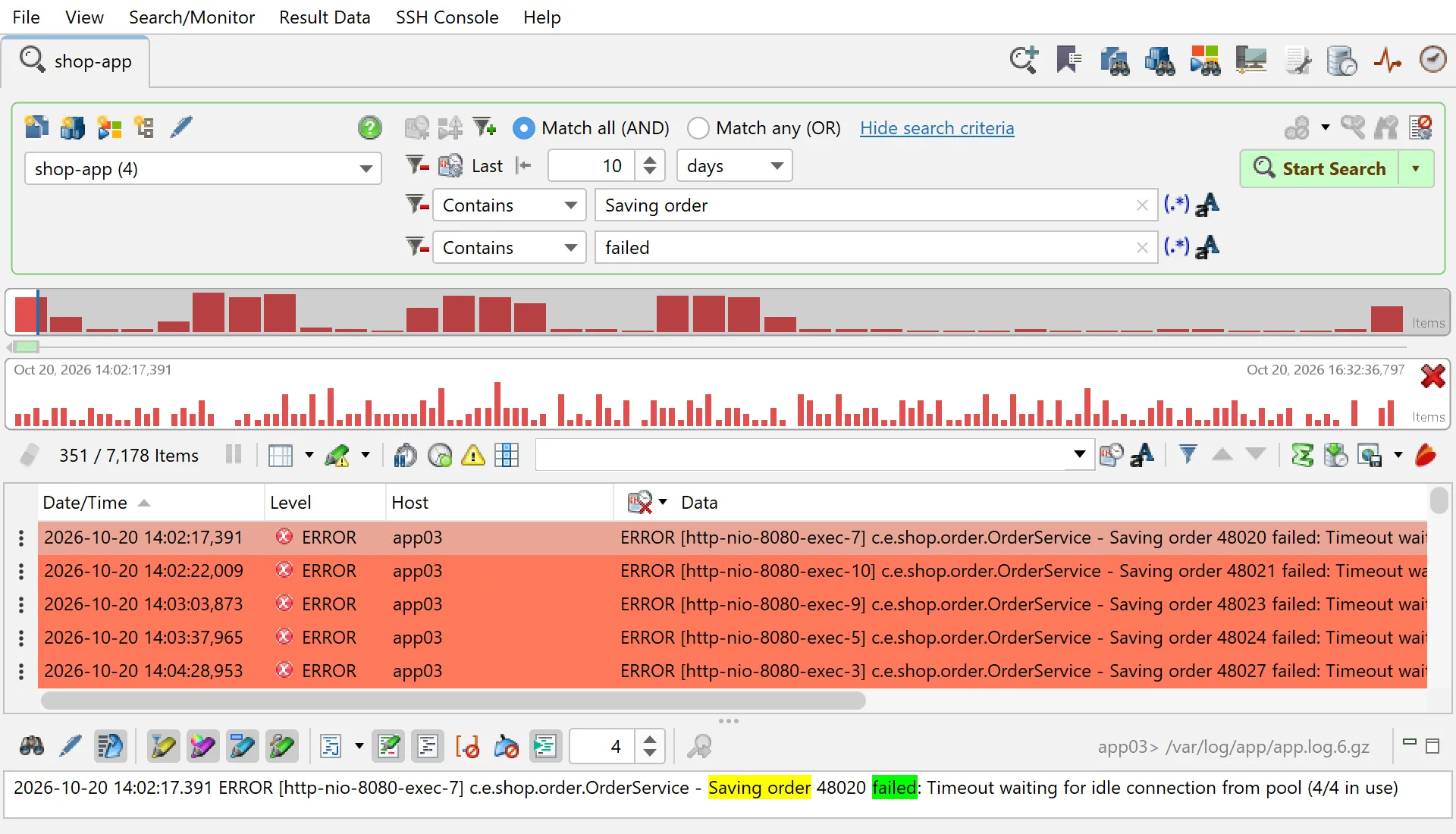
Search ten days for the error text
The search runs on each server. Only the matching lines travel to your machine, and they land in one table, sorted by time.
-
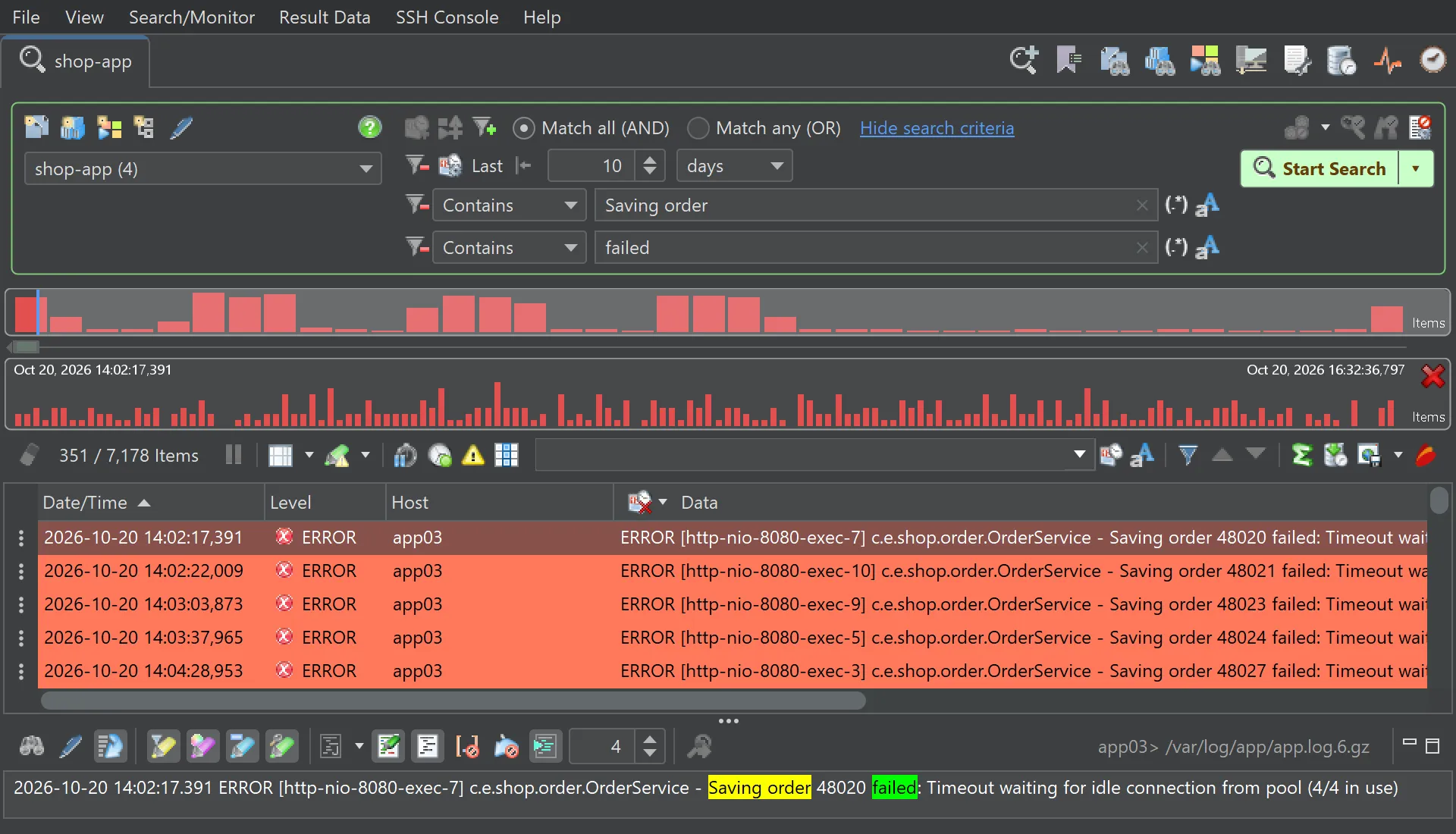
See when it started — and where
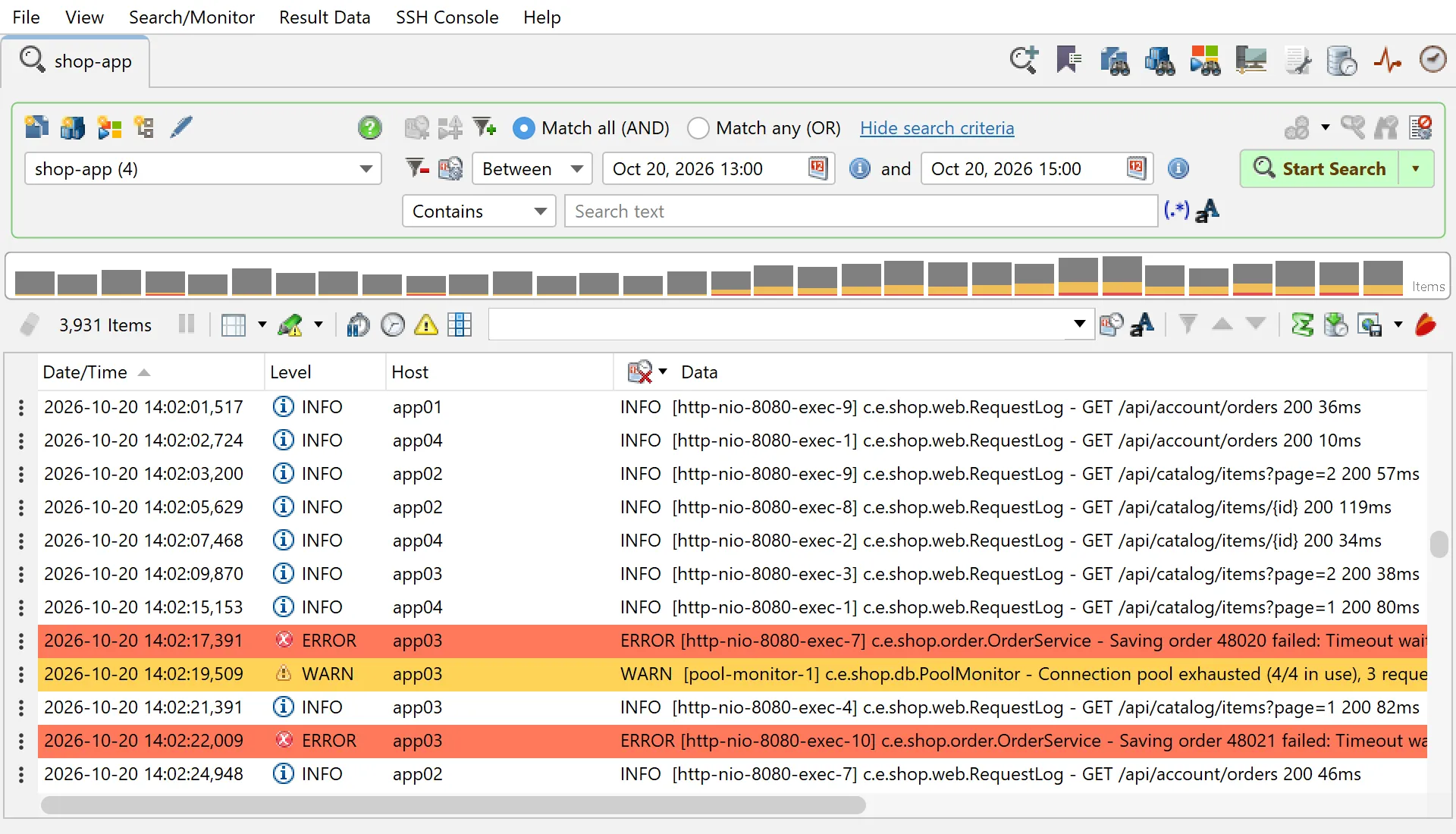
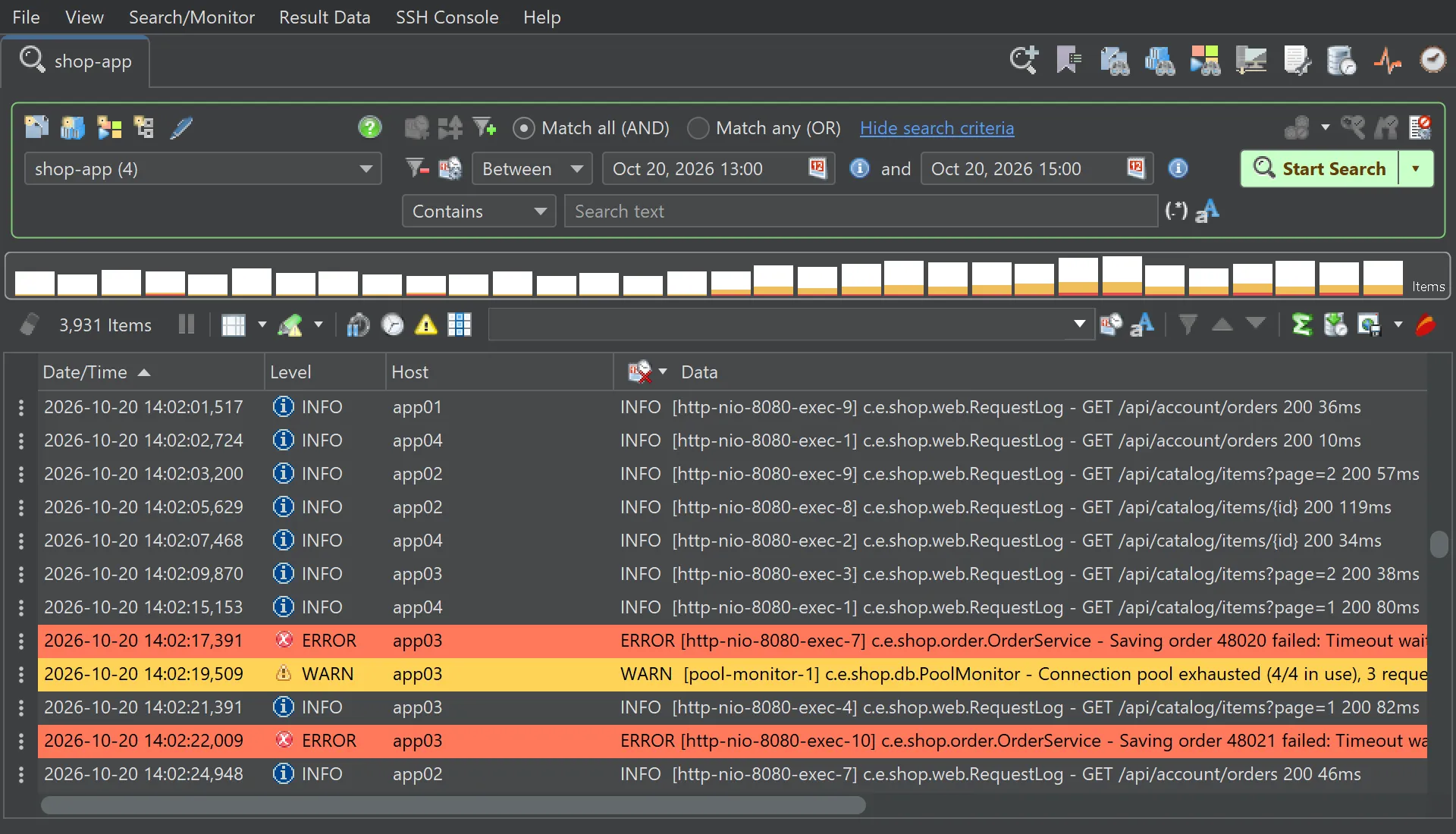
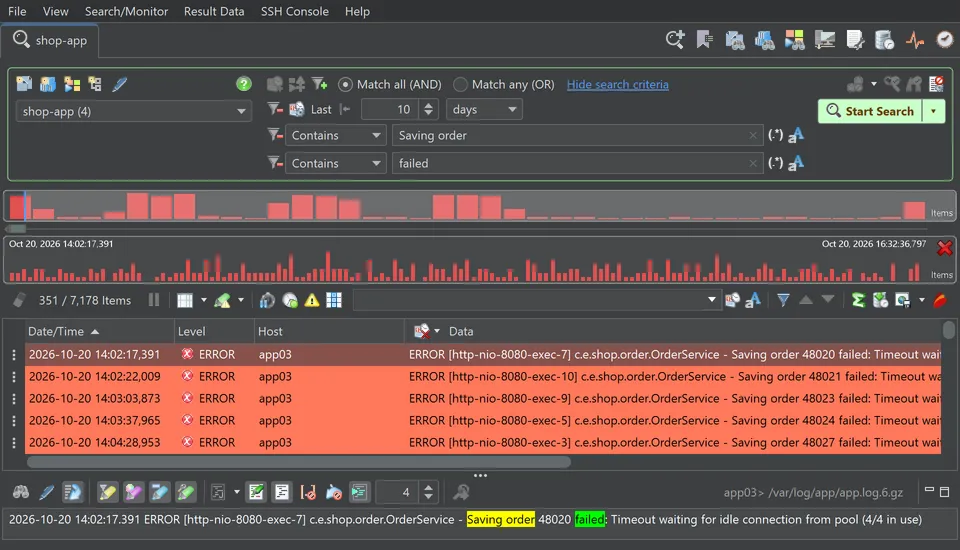
The chart above the table shows the first errors on Tuesday at 14:02, all from
app03. Drag across those bars; the table follows. Zoom in until a bar is a single second. Select the first error: the detail pane below the table shows the whole entry.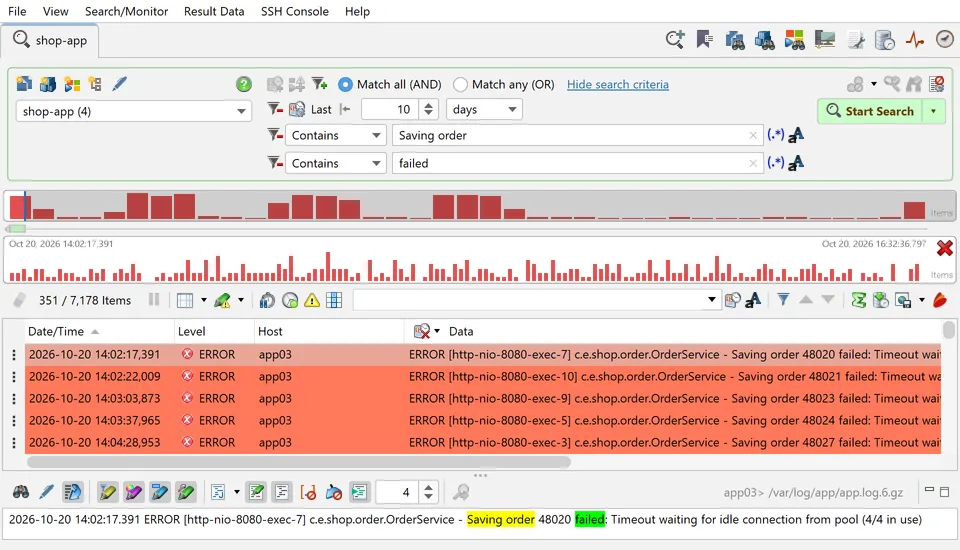
-
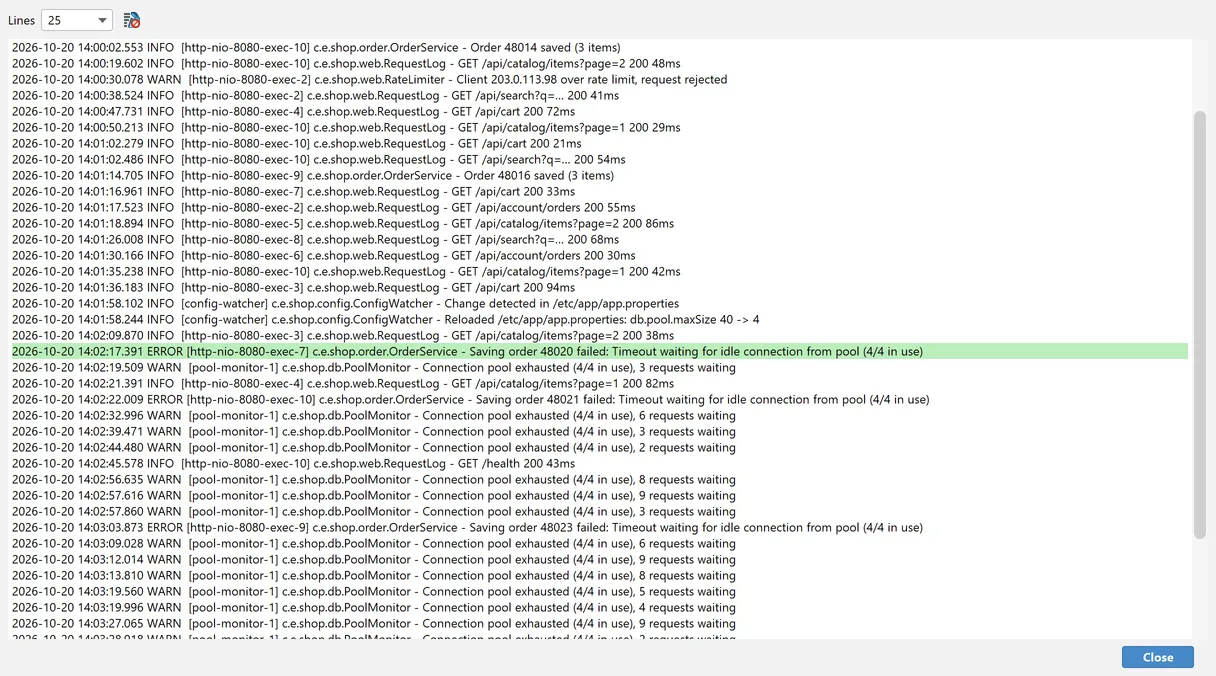
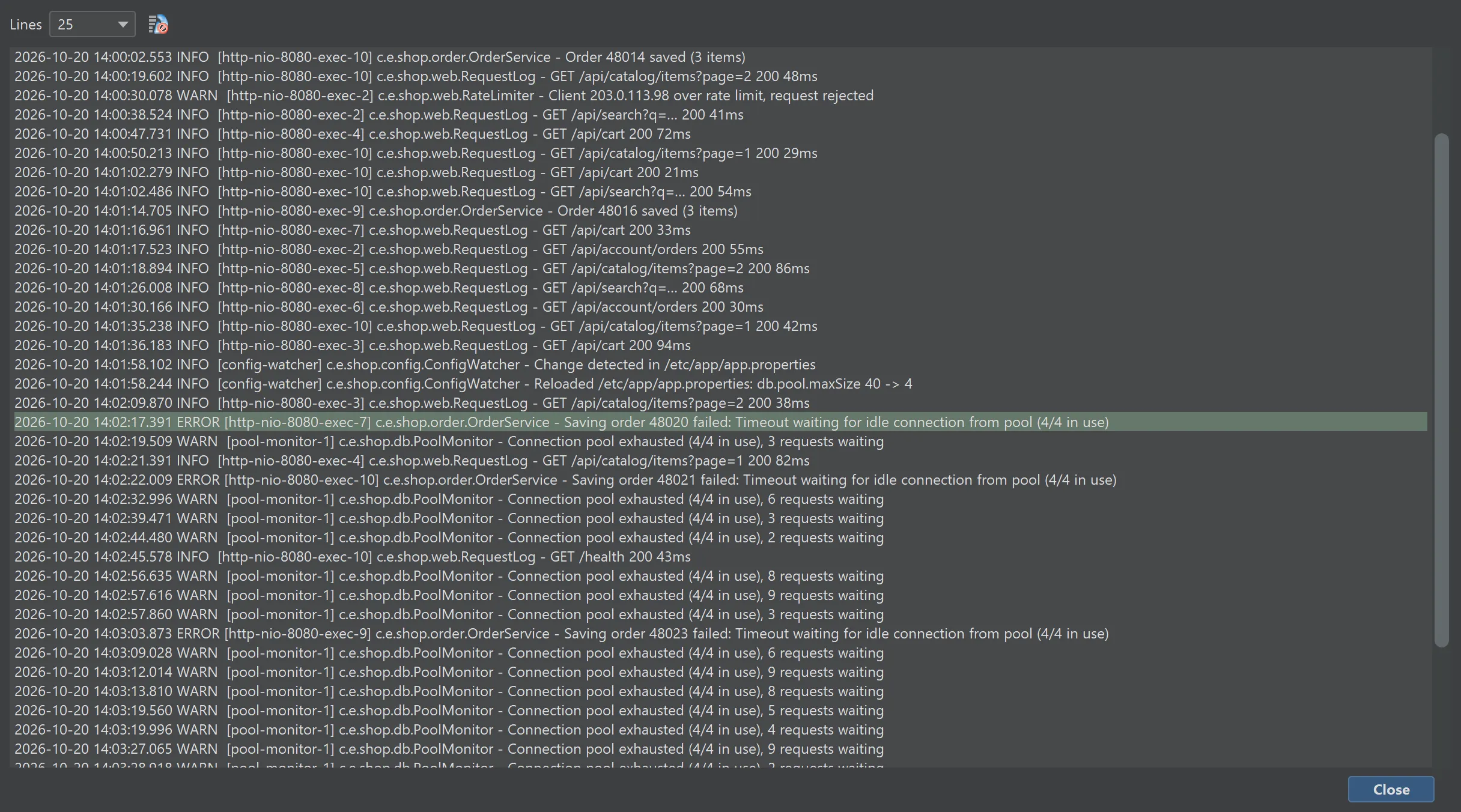
Read what happened just before
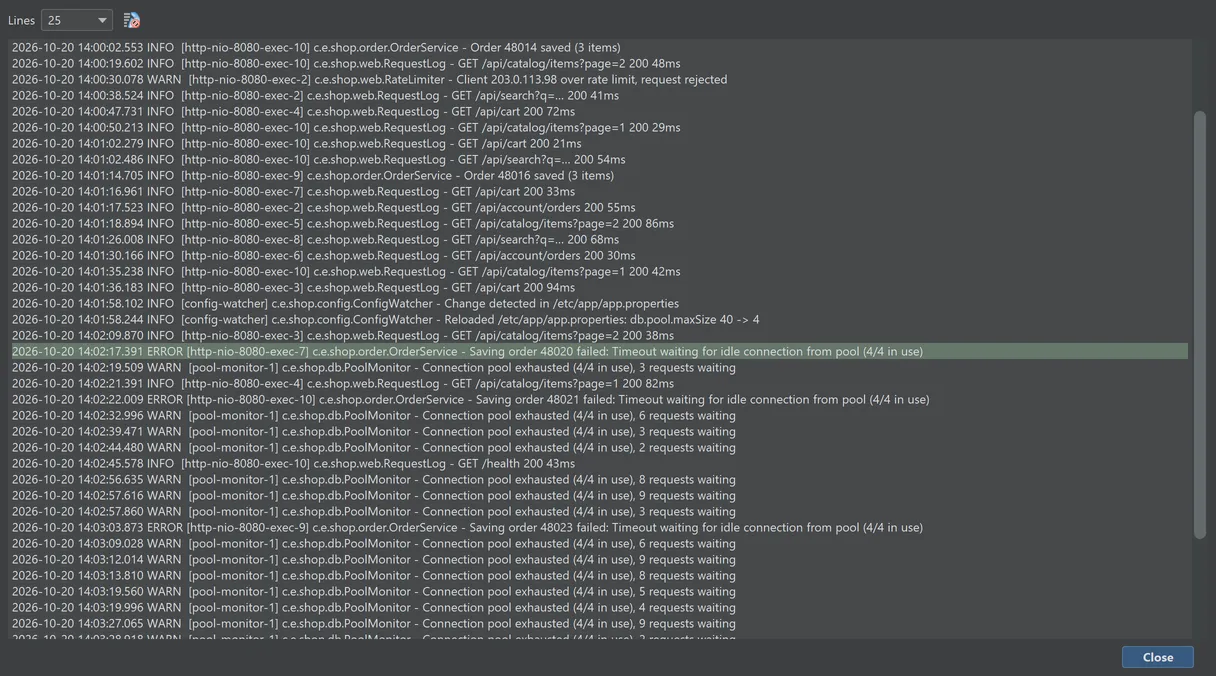
Open the source context of the first error. Two lines earlier: a configuration reload that changed the connection pool size. Time, server and cause — found.

Try it with your own servers Download, install, import your SSH hosts. No agent, no server, no account.
Try it with your own servers — on your computer: download, install, import your SSH hosts. No agent, no server, no account. Send me the link
What it reads
- Files on Linux, macOS and Unix serversover SSH, with sudo/su and jump hosts. The search runs on the server.
- Windows Event Logsof this computer, or of Windows servers over SSH (from any OS) or WinRM (from Windows, with Kerberos).
- Docker and Kubernetes containersthrough the
dockerandkubectlyou already use. Monitor a deployment, new pods included. - Local files and network sharesincluding archives. Drag a file into the window. Also the files of a syslog server such as WinSyslog.
- Small devicesswitches, access points and NAS boxes with busybox and dropbear SSH.
- All of it at oncein one table, sorted by time, with the chart above it.
Everything else — profiles, custom columns, RQL filters, highlighting, aggregation, correlation, export, the SSH console — is in the manual (English, German, Japanese).
Where are your logs?
Each page is one short example from start to finish.
Linux servers
"Who logged in last weekend?" — auth logs on six servers behind a jump host, readable only by root, partly compressed.
Windows Event Logs
"Who keeps locking the service account?" — Event ID 4740 on all domain controllers at once.
Appliances and Windows servers
"Why are the VPN logins rejected?" — the gateway's log next to the reason in the Windows servers' events, in one table.
Kubernetes and Docker
"Watch the rollout" — monitor a deployment while it rolls, new pods included, next to the database log.
Reproduce a bug
"Reproduce it while watching" — server log and local log in one live table.
A customer's systems
"Why does the service crash every night?" — application log on a share, Windows events, the database log on Linux: one timeline shows whose problem it is.
Where it fits
Your log platform or SIEM collects, keeps and alerts. Retrospective doesn't replace it. It is for the logs that never made it there — the test system, the extra app server, the debug log, the customer's machine — and for the moment when you can't wait for indexing.
It uses your own access. A read-only account is enough. Logs are read from the source and kept only on your computer; stored passwords are encrypted for your installation alone.
What it is not
- not a place to keep logs for months
- not an alerting system
- not a compliance archive
- not a replacement for your log platform
Try it free. License it to keep using it.
The free version is for trying Retrospective with your own logs: it searches and monitors every kind of source, and there is no trial period that runs out. For ongoing use you need a licence. It also adds exporting, aggregation and correlation, snapshots, saved views, the built-in SSH console, and more than 100 MB of results per tab.
- Personal licence$92 per user · one year of updates
- Company licence$265 per user · one year of updates and support · volume discounts
Who makes it
Retrospective is built by centeractive, a small software company in Gümligen near Bern. It started in 2011 as our own tool on an integration project with dozens of servers, was first released in 2012 and has been developed ever since — more than 30 releases.
We also write about what we learn while building it, and how we think about reading logs: Notes from the workbench.


